Bamboo — pros
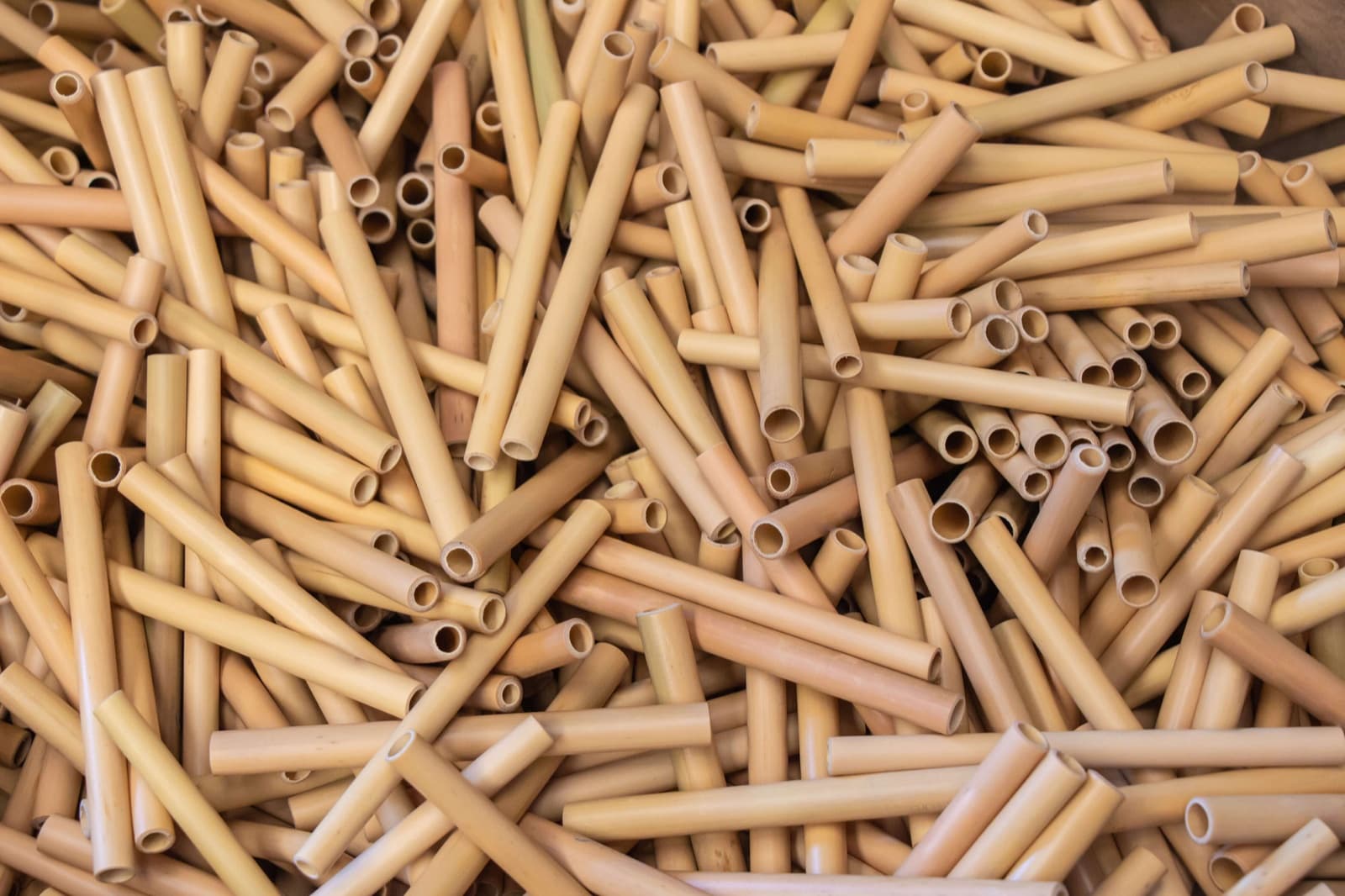
Native to Asia, bamboo is a highly resilient plant that can grow up to 9 metres tall. A single stand can yield dozens of straws!
It's a 100% natural, biodegradable and renewable material with naturally antibacterial properties. Since bamboo is already hollow, little processing is needed — hence an affordable price for a reusable straw that's also dishwasher-safe. Environmentally, bamboo produces more oxygen than any tree while absorbing more greenhouse gas.
Its other big strength: personalisation. Engraving is done by laser, for a result that lasts, turning it into your best marketing tool — you can even sell it to guests in pouches or individually.
Finally, choosing bamboo supports the growth of small local businesses: its fully artisanal processing sustains entire communities across Asia.
Bamboo — cons
If there's one drawback, it's the limited design options: being 100% natural, it only comes in bamboo's own colour — which is also part of its charm, with an increasingly on-trend natural look.
Unlike steel, which needs no care, the bamboo straw has to dry properly after use or it weakens over time. It lasts 30 to 150 washes in a professional machine depending on membrane thickness, and at least 500 uses with a bottle brush.
At end of life though, there's no downside: it's 100% recyclable and biodegradable, fit for a wood collection or a compost bin alike.
Steel — pros
The steel straw has one big advantage: it comes in every shape and colour — teal, rose gold, silver, turquoise — and can even be bent, unlike bamboo.
Very resistant, it's also dishwasher-safe, completely unbreakable, and needs no special care at all.
Steel — cons
One impractical side in hospitality: it's strongly discouraged for children, who could hurt themselves biting it. Being unbreakable, it even poses risks for adults — an accidental knock on a weakened tooth, or use as a makeshift weapon, something that has already happened in some nightlife bars.
Though endlessly recyclable, it's anything but natural: its production remains industrial and polluting, mostly benefiting large manufacturers.
Steel is also a heat conductor: the straw heats up with a hot drink and freezes with a cold one — fine for room-temperature cocktails, much less so for anything else. Its feel against teeth also puts off many guests.
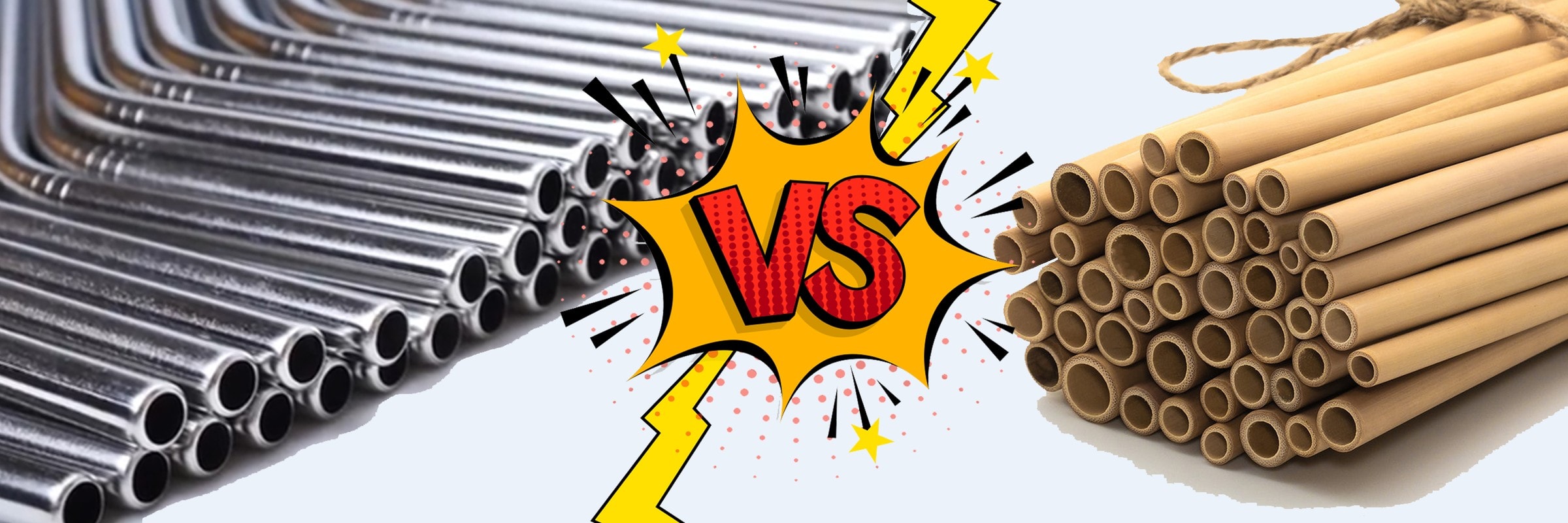
Comparison: bamboo vs steel
Bamboo and steel straws aren't equal in terms of societal impact, versatility, marketing value, and ease of use and upkeep. Here's a quick recap of the pros and cons of each eco-friendly straw:
Bamboo straws
- ✓Attractive, natural and biodegradable
- ✓A marketing tool, personalisable with laser engraving
- ✓Suit any type of drink, hot or cold
- ✓Low-risk and child-safe
- ✓Positive environmental and social impact
- !Not available in other shapes or colours
- !Limited reuse: around 30 dishwasher cycles on average
Steel straws
- ✓Unbreakable and endlessly reusable
- ✓Clean with a brush or in a machine
- ✓Standardised production
- ✓Available in many shapes and colours
- !Feel and texture are hit or miss
- !Not suited to hot or cold drinks
- !Dangerous, not suited to children
- !Can be used as a makeshift weapon
Whether it's the bamboo straw or the steel straw, your restaurant's green approach stands either way. The steel straw has a big edge in reusability but remains far more dangerous, while the bamboo straw stands out for being eco-friendly, natural and personalisable.
Our French company, Badabambou, is a bamboo straw wholesaler. We also offer bamboo straw personalisation at very competitive rates. Contact us for more information.
Switch to bamboo, your way
Get a sample or a tailored quote within 48h. Let's talk about your project.
Request a quote